
AI Ate 89% of Our Client's Blog Traffic. Revenue Per Click Went Up 165%.
AI cut blog traffic to a Bay Area plumbing client by 89%. Revenue per click still rose 165% once local and service pages picked up the slack.
March 23, 2021
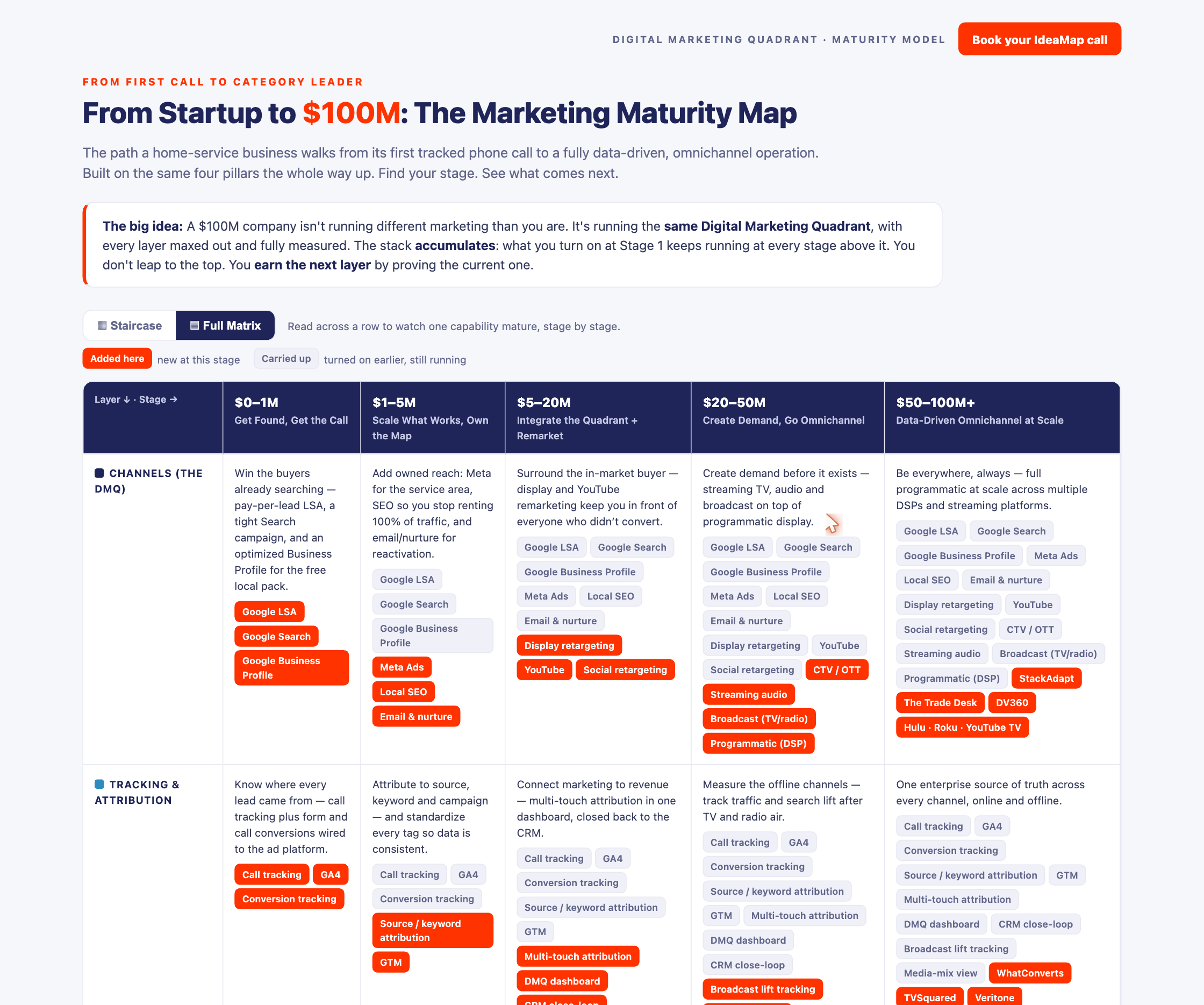
We took apart the marketing stack behind a $100M home-service company. It runs the same four pillars a startup runs. The difference is stacking. Here is the five-stage map from your first tracked call to a fully data-driven operation.

We took apart the marketing stack behind one of the biggest home-service companies in the country. Over $100M a year in revenue.
I expected to find something exotic. Some secret channel or tool nobody else has access to.
Here’s what’s really going on: they run the same four marketing pillars a brand-new company runs. Paid search. SEO. Social. Email. The same Digital Marketing Quadrant we build for every client.
The difference isn’t the playbook. It’s how much of it is turned on, and how well it’s measured.
When a home-service owner looks at the dominant company in their market, they usually draw the wrong conclusion.
They assume the big company is doing something categorically different. Some advanced strategy that explains the gap. And because they can’t see what it is, they either chase shiny tools they aren’t ready for, or they decide big-company marketing is a different sport and stop paying attention.
Both reactions cost money.
The truth is more useful. That $100M company is running the same channels you are. They’ve just been adding layers for fifteen years, and they never turn anything off.
This is the part most people miss.
The Local Services Ads a startup turns on in year one? Still running at $100M. The Google Business Profile they optimized when they had two trucks? Still working, still ranking, still producing calls.
Growth in this industry doesn’t come from replacing what works. It comes from stacking new capabilities on top of what’s already producing. Each layer keeps running while the next one gets added.
When our team mapped the full stack of that $100M operator, we counted 63 distinct marketing capabilities running at once. A startup doing it right runs about 10. Every one of those 10 was still in the stack at 63.
Here’s the second thing the map makes obvious: there’s an order, and the order is enforced by economics.
You don’t buy streaming TV ads because you read about them. You don’t add household-level visitor identification because a vendor demo looked impressive. Those layers only pay for themselves when the layers below them are already dialed in.
The progression looks like this:
Win the buyers already searching. Pay-per-lead LSA, a tight search campaign, an optimized Business Profile, and a simple website built to make the phone ring. Every dollar must produce a tracked lead. The unlock to the next stage is proven lead economics: when you know your cost per lead and close rate, you can scale spend with confidence.
Add owned reach. Meta for the service area, SEO so you stop renting 100% of your traffic, email for reactivation. The unlock: all four pillars producing and measured, and a list big enough to remarket to.
Surround the in-market buyer. Display and YouTube remarketing keep you in front of everyone who didn’t convert the first time. Your data starts working: custom audiences, lookalikes, multi-touch attribution closed back to the CRM. The unlock: you’re now capturing nearly everyone already searching. To keep growing, you have to create demand.
Streaming TV, audio, and broadcast on top of programmatic display. You stop only capturing intent and start generating it. Brand becomes a growth lever. The unlock: with that much spend across that many channels, the constraint becomes knowing which touch actually drove revenue.
Marketing is now a data and identity operation. Every visitor known, every channel measured online and offline, every dollar optimized. This is where tools like identity resolution and broadcast lift tracking earn their keep.
Capabilities lead. Tools follow. The vendor names change every few years. The capabilities don’t.
It’s not arbitrary. Each stage exists to prove something the next stage depends on.
You can’t scale spend before you know your lead economics, because you’d be scaling blind. You can’t remarket before you have traffic and a list, because there’s nobody to remarket to. You can’t measure brand lift from TV before you have attribution infrastructure, because you’d have no way to see the lift.
Skip a layer and the money leaks. We’ve watched companies buy Stage 4 tools on a Stage 1 foundation. The tools weren’t the problem. The sequence was.
We turned this into an interactive map: five revenue stages, five capability layers, and every tool marked as either new at that stage or carried up from below. Click any stage and see exactly what’s running at that level.
It’s free and there’s no email gate. Find the stage that matches your revenue. That’s where you are today. The stage above it is your plan.
And if you’re not sure which stage you’re in, that’s exactly what an IdeaMap call figures out: where you are, what’s actually working, and the next layer worth paying for. Book your IdeaMap call here.
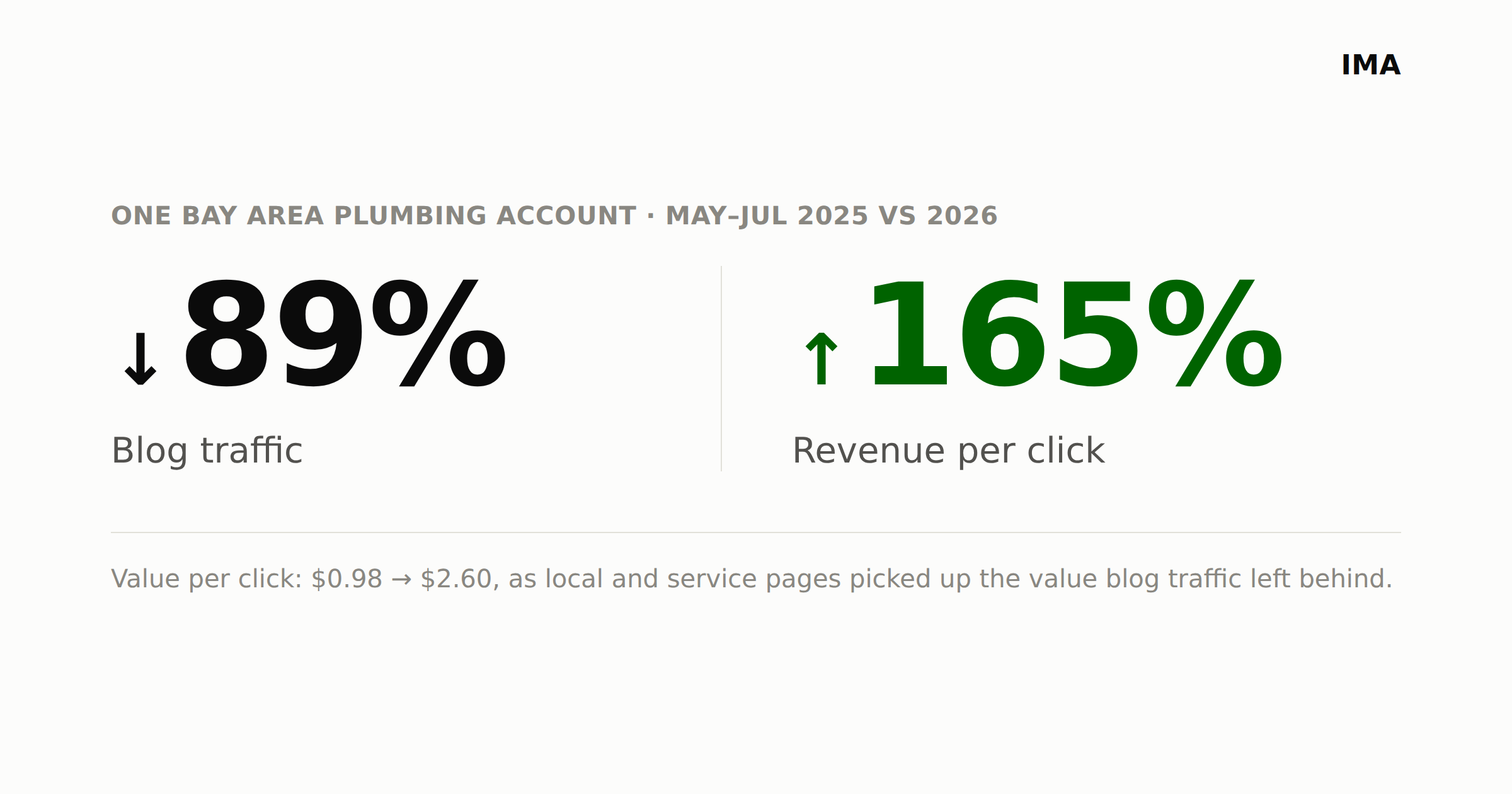
AI cut blog traffic to a Bay Area plumbing client by 89%. Revenue per click still rose 165% once local and service pages picked up the slack.
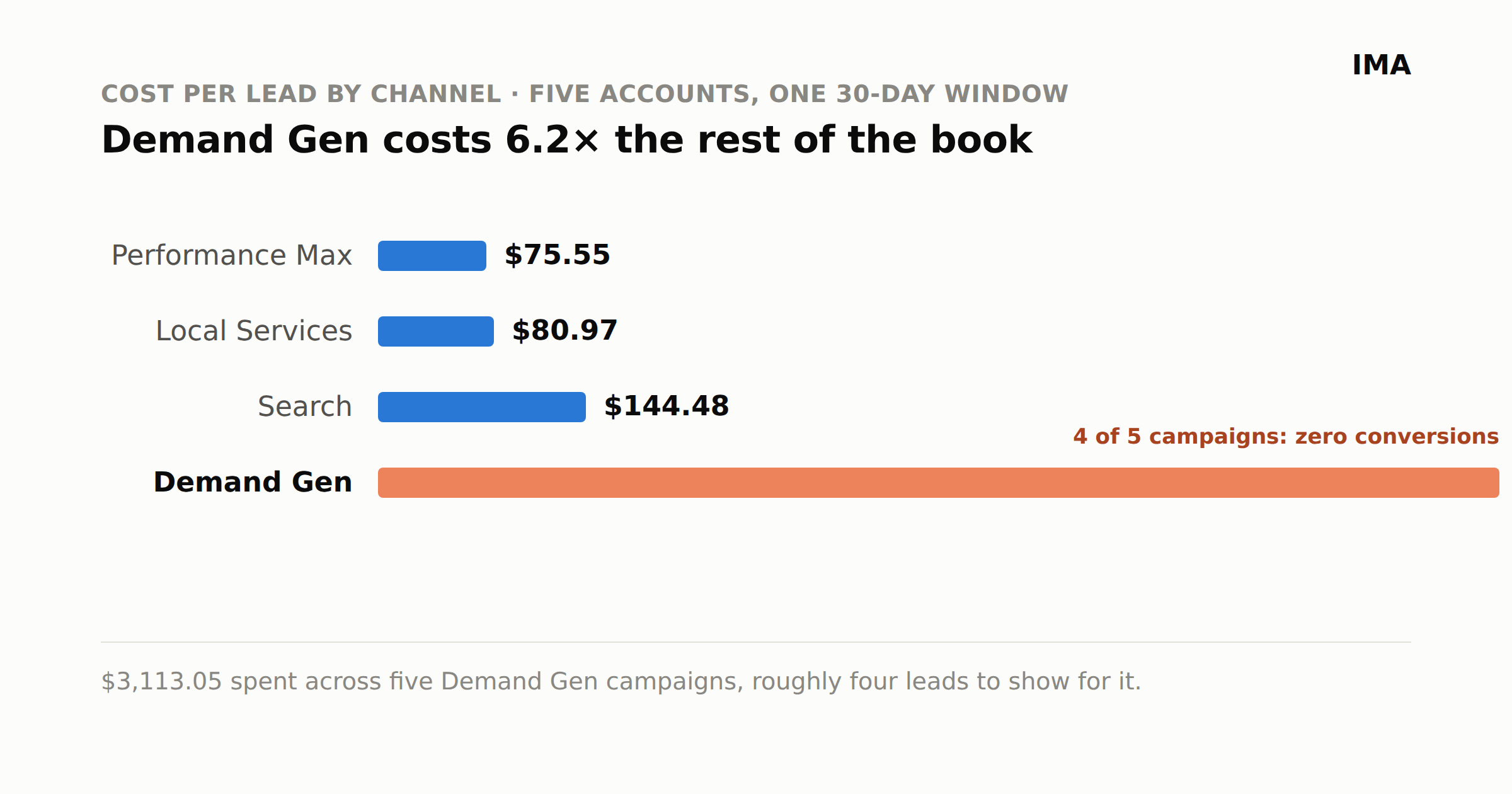
Five home-service accounts spent $3,113 on Google Demand Gen in 30 days and booked four leads. That is $779 per lead against a $125.70 book average.
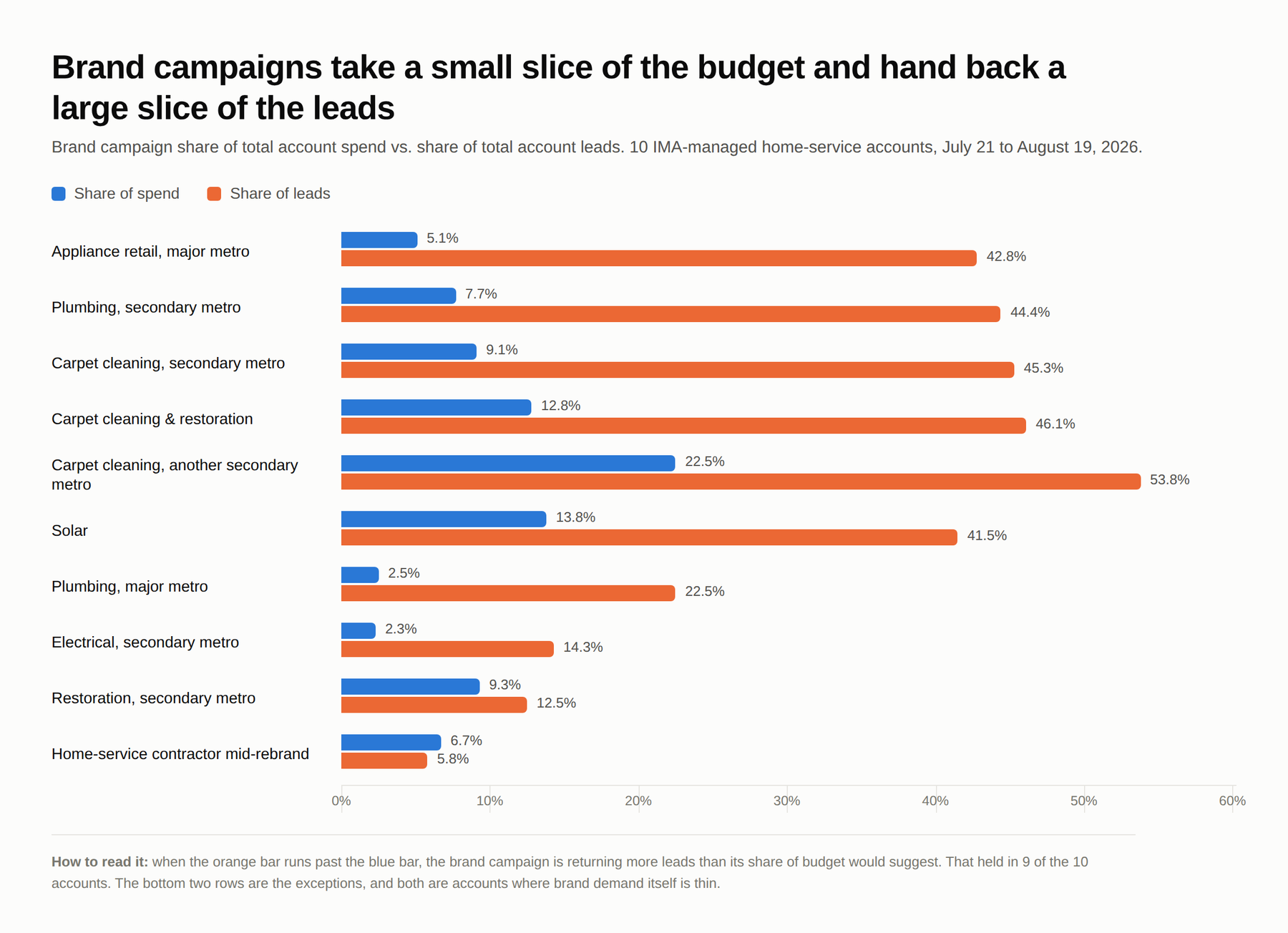
In one plumbing account spending almost six figures the brand campaign was 2.5% of spend and 22.5% of leads. We checked that pattern across 10 home-service accounts.